Cooling module architecture
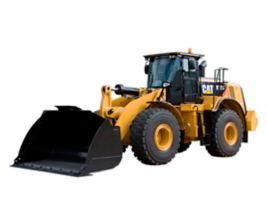
The cooling system is a single cooling unit, which includes Radiator, ATAAC, Oil cooler and Fan installation. The cooling module is located at the rear of the loader, away from dust and debris stirred up by the bucket while the machine is working. The radiator has 6.5 fins per inch (fpi) which helps reduce plugging.
Cat C6.6 ACERT™
The Cat® C6.6 is a 6.6 liter (403 in3) displacement, six-cylinder, in-line configured engine that utilizes the Caterpillar Common Rail fuel system for fuel delivery. It uses ACERT™ Technology, a series of Caterpillar engineered innovations that provide advanced electronic control, precision fuel delivery and refined air management, resulting in outstanding performance and lower emissions.
The C6.6 with ACERT Technology offers a compact design with big, heavy-duty engine features for outstanding durability, reliability and performance. The C6.6 incorporates a new cross flow cylinder head design, 4 valve head and an ADEM™ A4 electronic controller. The C6.6 also features proven cylinder block, pistons and crankshaft and incorporates the common rail fuel system. ACERT™ technology enables the C6.6 engine to meet the U.S. EPA Tier 3, European Union Stage IIIa and Japan Ministry of Land, Infrastructure & Transport Step 3 emissions standards, which dramatically reduce nitrous oxides (NOx) and other emissions.
ACERT™ technology used on the C6.6 consists of three basic building block systems: electronic control, fuel delivery, and air management. These have been refined to control the combustion process to a higher degree than ever before possible.
Electronic control. ADEM™ A4
The Advanced Diesel Engine Management — Electronic Control Module continuously monitors important engine conditions and functions. It uses sensors throughout the engine to regulate fuel delivery and all other engine systems that require input to manage load and performance. ADEM™ A4 is the brain behind engine responsiveness, self-diagnosis, controlling emissions, and fuel economy.
Fuel System
Through multiple injection fuel delivery, fuel is introduced in the combustion chamber in a number of precisely controlled microbursts. Injecting fuel in this way allows for precise shaping of the combustion cycle. The ADEM™ A4 module directs the injectors to deliver precise quantities of fuel at exactly the right times during the combustion cycle.
This process provides precise control over a range of combustion variables, which can be regulated to produce higher performance with fewer emissions. Fuel is delivered at high pressure to each combustion chamber through a Caterpillar designed injector linked to a Common Rail fuel system.
Air Management
Air management is a key concept in optimizing engine performance and controlling emissions. Engines must breathe clean cool air in order to perform. To aid this, the C6.6 uses a turbocharger fitted with a smart waste gate to give precise and reliable control of the boost pressure. A new cross-flow design in the cylinder head facilitates air movement, while tighter tolerances between the piston and cylinder liner reduce blow-by gases.
Fuel pump
The C6.6 uses an oil-lubricated high-pressure fuel pump to feed the common rail.
Fuel Priming Pump
An electrical fuel-priming pump, standard, is located between the fuel tank and the combined water separator/primary fuel filter. The triple fuel filters, water separator design, provides protection to the injection system against low-quality or contaminated fuel.
Starting System
The Electronic Speed Selector Switch (A), a “rocker” switch located on the right console, sets the engine rpm. The ADEM A4 engine controller will always start the engine in low idle. The engine rpm can be seen on the digital display of the instrument cluster in the gage cluster or in the performance menu in Messenger.
Air-to-Air After cooler (ATAAC)
The air-to-air after cooler is a single pass, aluminum, heat exchanger or cooling system for the pressurized air coming from the turbocharger, before it enters the engine intake manifold. Cooling the pressurized air from the turbocharger increases the density of the engine's intake air. The increased air density in the cylinders results in more power, improved combustion, and reduced exhaust emissions.
Servicability
Unit injectors can be serviced individually, without the need to service the whole fuel system.
Engine Installation
The engine is installed using rubber mounts to reduce the transfer of engine vibration to the frame and cab, lowering operator vibration, sound levels, and fatigue.
Rear Engine Location
Rear engine location allows excellent forward visibility, while serving as a working counterweight. It also helps reduce radiator plugging while providing easy service access to the engine and other major components.
Hydraulic on-demand fan
The fan is a hydraulic demand type with optional reversible function, and operates normally in suction mode.
The complete cooling package has been designed for a very easy maintenance with a complete accessibility to the cores for cleaning (fan door swing out opening, latches.